Atlas Access
A safer, more structured path from workforce data to accountable access across complex enterprise SaaS environments.
FEATURED PRODUCT VIEW / FINAL REVIEW
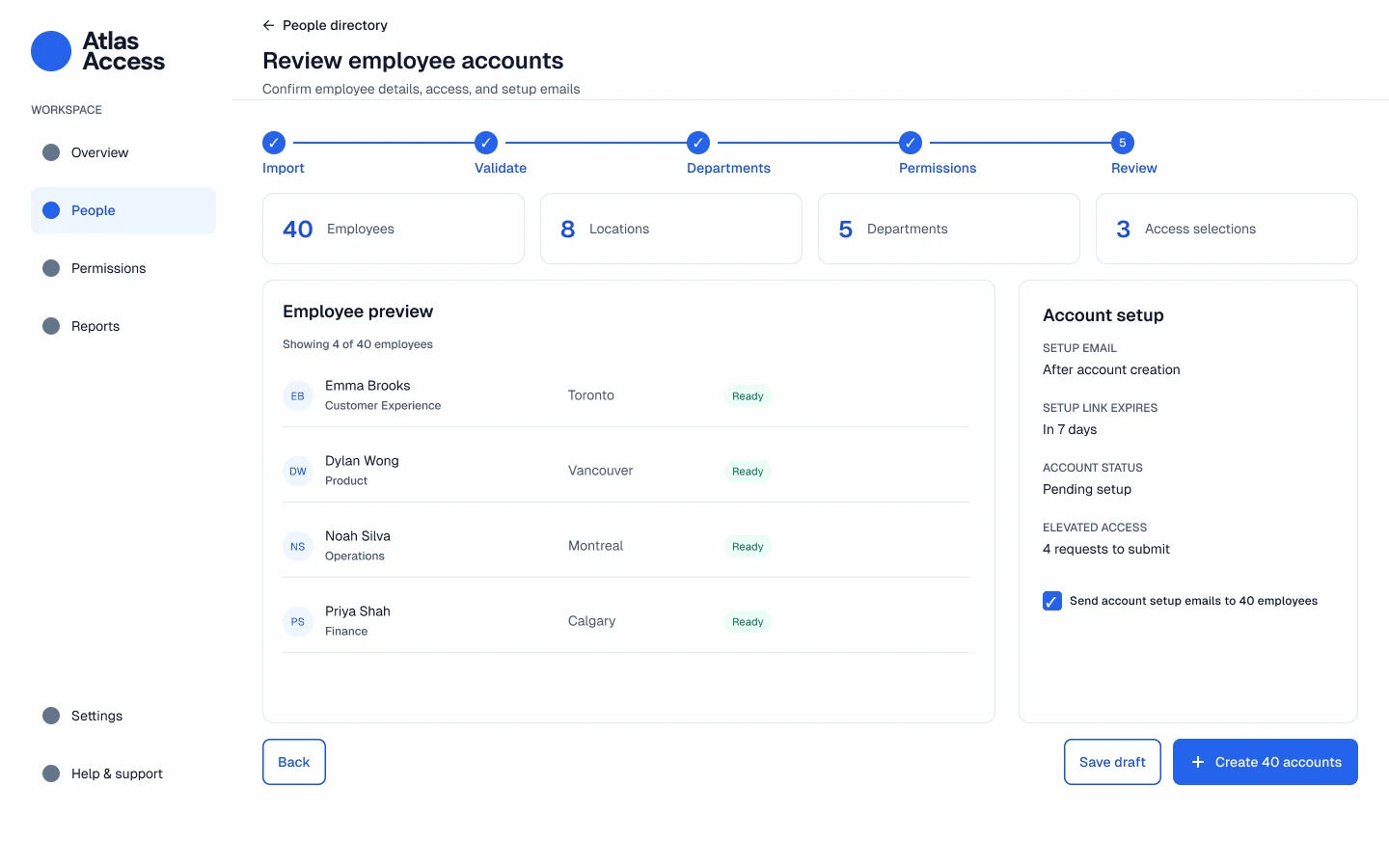
01 / CONTEXT + CHALLENGE
Turn a fragile handoff into a controlled workflow.
Bulk onboarding may start with a spreadsheet, but it ends with identity, access, and compliance decisions. I reframed the task from “upload employees” to a controlled workflow that catches bad data, explains permission impact, and establishes ownership before accounts are created. The representative scenario follows 40 new starters across an organization of 500 people and eight locations.
500
EMPLOYEES
8
LOCATIONS
40
NEW STARTERS
02 / WORKFLOW STRATEGY
Break one risky action into five accountable decisions.
I mapped the experience around the questions an operator must answer in sequence: Is the data usable? Where does each person belong? What access should they inherit? Which exceptions need approval? What exactly will happen on submission?
01 / IMPORT
Define the batch
Upload a CSV, confirm its source, and define the working scope.
02 / VALIDATE
Resolve data issues
Surface missing, invalid, and duplicate records before configuration.
03 / MAP
Normalize structure
Map unfamiliar values once and reuse the decision across the batch.
04 / ACCESS
Assign and approve access
Separate standard role-based access from elevated requests.
05 / REVIEW
Confirm before creation
Review people, permissions, approvals, and setup communications together.
BACK NAVIGATION AND SAVE DRAFT PRESERVE VALIDATED DATA, MAPPINGS, AND ACCESS DECISIONS THROUGHOUT THE FLOW.
03 / VALIDATION + TRUST
Resolve uncertainty before it becomes account data.
I moved validation to the front of the experience so operators can distinguish blocking errors from records that are ready to continue. A persistent summary explains what needs attention, while row-level actions keep each fix in context.
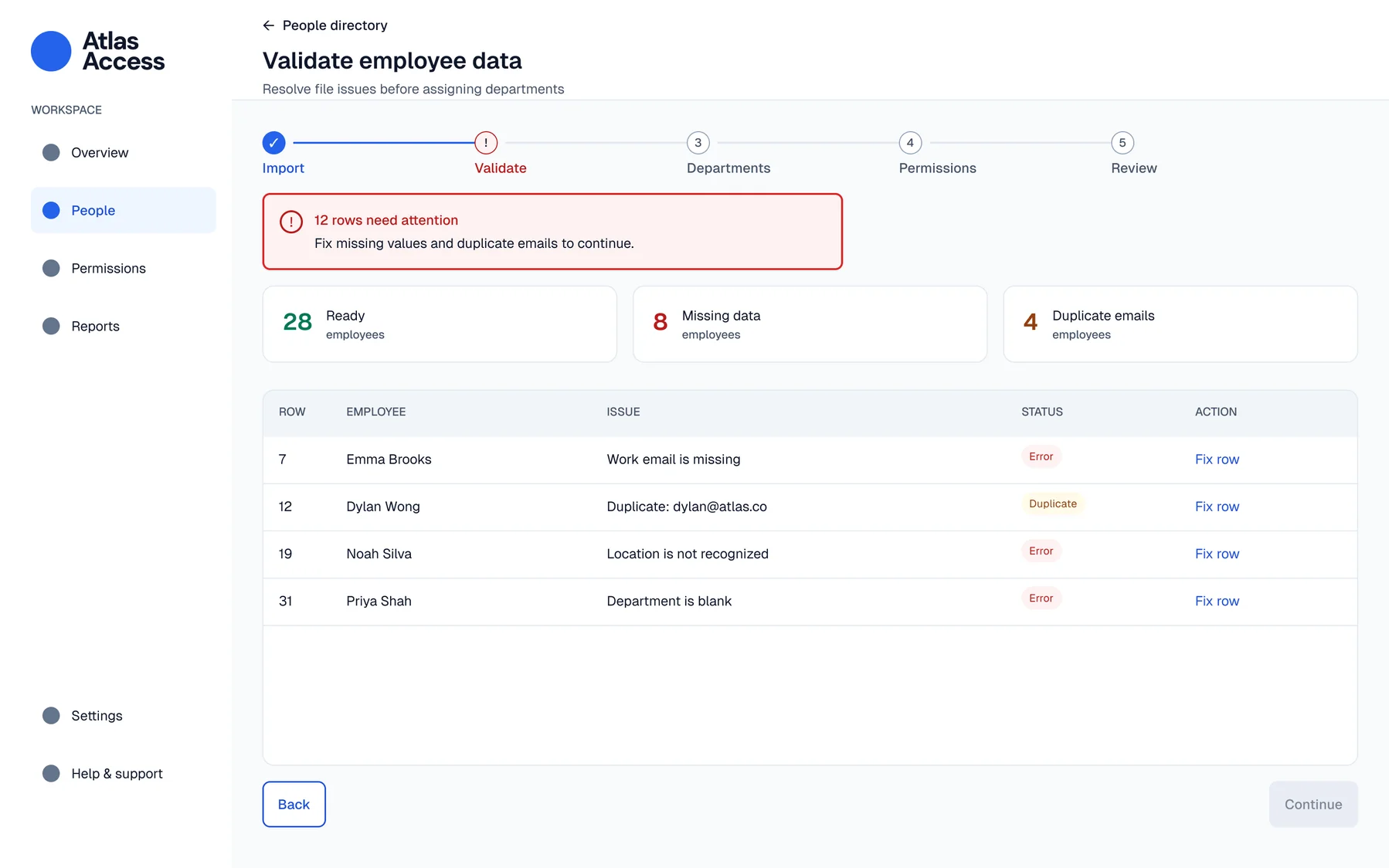
01 / DECISION GATE
Make progress rules explicit
The summary names every blocking issue and explains what must change before the workflow can continue.
02 / IN-CONTEXT RECOVERY
Resolve problems at the source
Each issue stays attached to the affected employee, so operators can resolve it without cross-referencing a separate report.
PRODUCT VIEW 01 / VALIDATION
04 / ACCESS + APPROVALS
Translate permissions into understandable choices.
I organized access around recognizable groups rather than system-level controls. Operators can see what each group provides, who will receive it, and which elevated requests require approval before the batch moves forward.
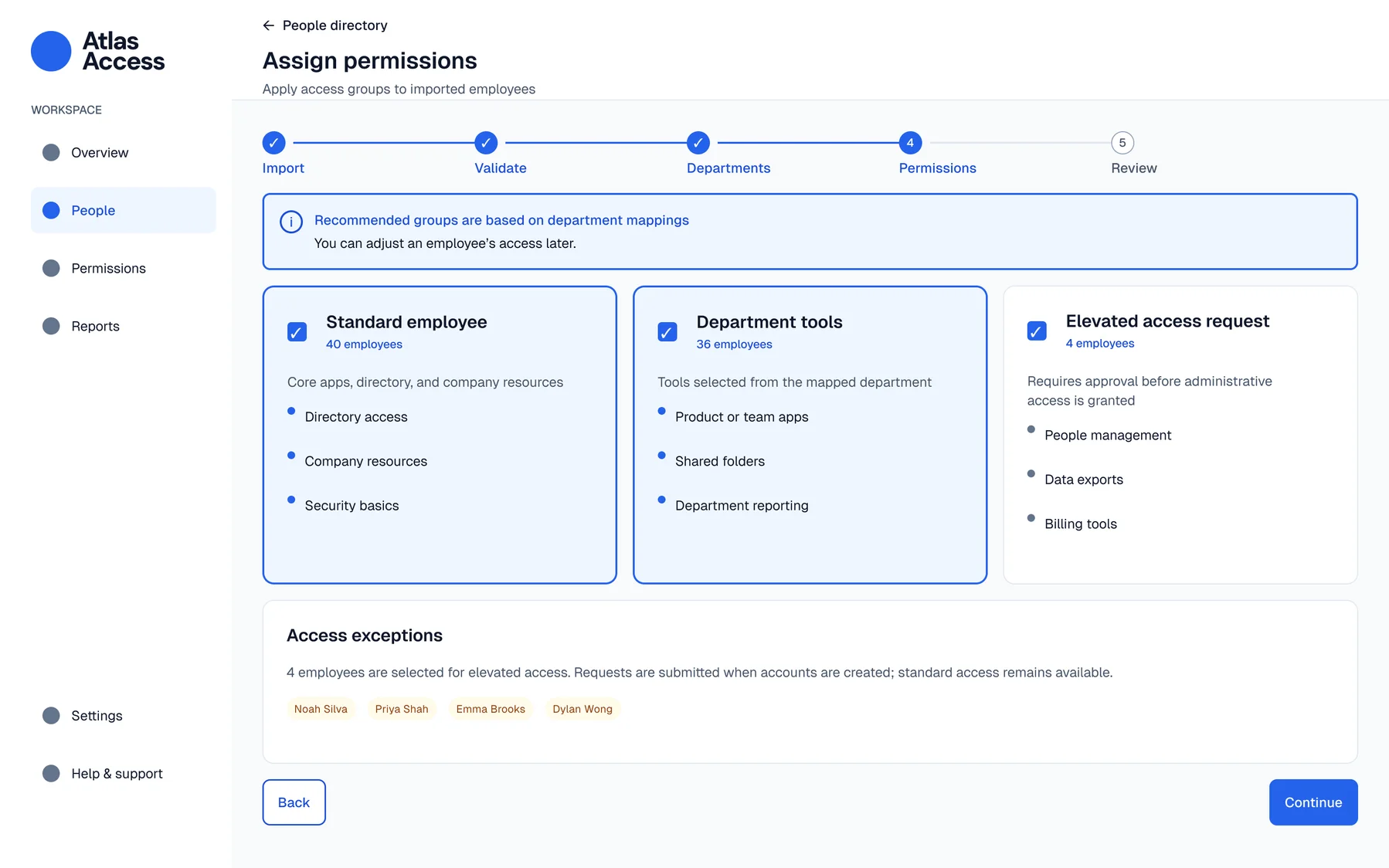
03 / ROLE-BASED ACCESS
Explain inherited access
Group names, member counts, and example resources clarify what people receive through their role.
04 / GOVERNED EXCEPTIONS
Keep elevated access accountable
Higher privileges become explicit requests, with affected employees and approvers clearly identified.
PRODUCT VIEW 02 / PERMISSIONS
05 / EDGE CASES + RECOVERY
Design the failure paths as carefully as the ideal one.
The value of the workflow appears when data is incomplete, permission rules conflict, or progress is interrupted. I defined reusable patterns for the exceptions most likely to create support work or unsafe access.
01 / IDENTITY
Duplicate person
Compare the incoming record with the existing identity, then merge, hold, or exclude it deliberately.
02 / STRUCTURE
Unknown department
Map an unfamiliar value once and apply the decision consistently to matching rows.
03 / ACCESS
Elevated request
Continue with standard access while the higher privilege follows a separate approval path.
04 / RECOVERY
Partial progress
Save validated records, mappings, and selections so the operator can return without repeating work.
06 / SYSTEM + OUTCOME
A product workflow built to scale with Atlas.
I built the experience in Figma using Atlas Design System components, variables, and interaction patterns. The shared foundation kept complex states consistent across validation, permissions, recovery, and audit history, while creating reusable patterns for future operational workflows.
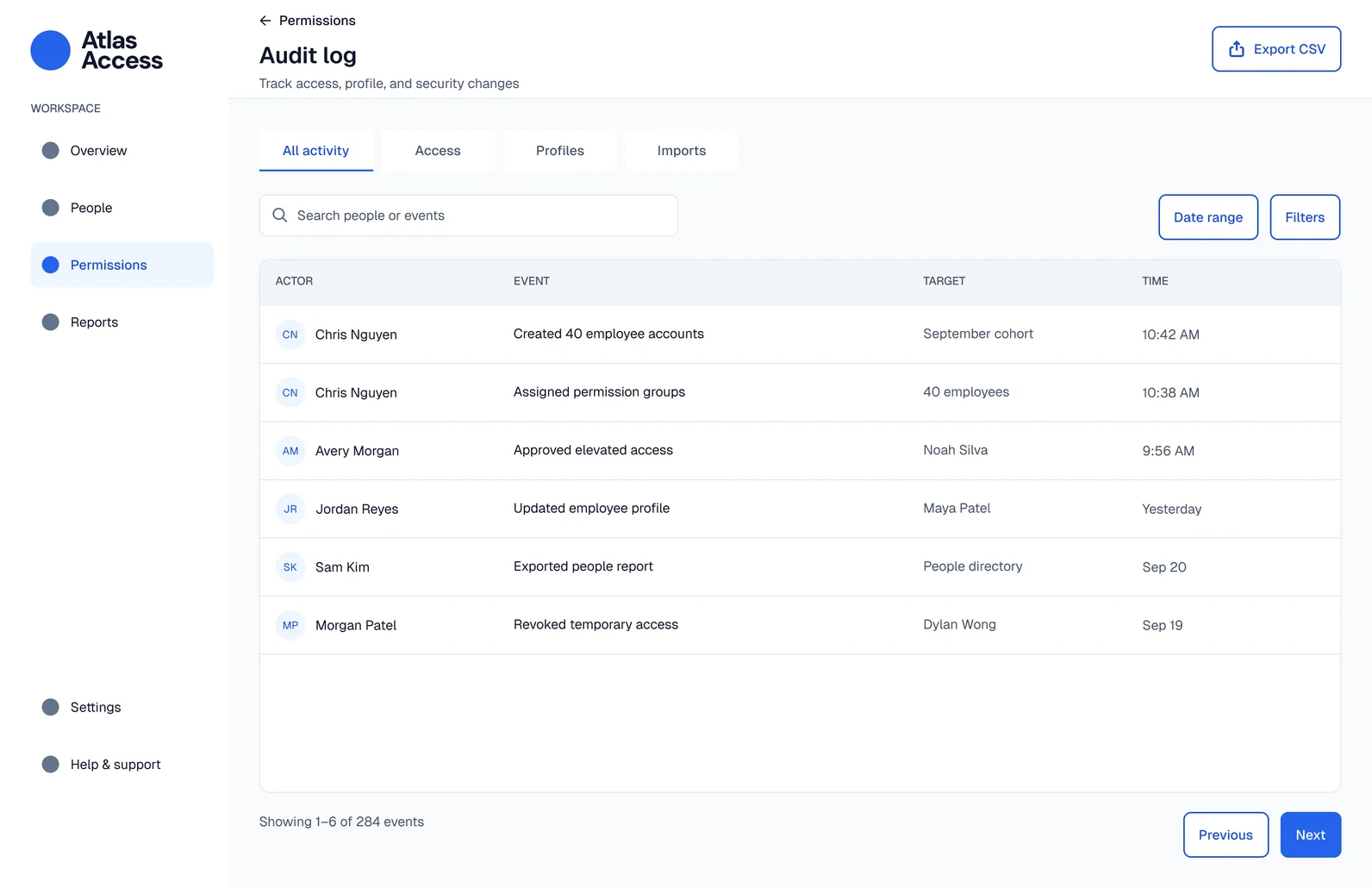
PRODUCT VIEW 03 / AUDIT HISTORY
Every decision leaves usable context.
The completed batch records who acted, what changed, which people were affected, and when it happened, giving operations and support teams a reliable history.
- 01
Guided multi-step onboarding
- 02
Explainable access decisions
- 03
Recovery without rework
- 04
Reusable Atlas patterns
PROJECT CONFIDENTIALITY
Atlas Access is an anonymized version of real client work currently under NDA. Names, branding, data, and identifying details have been changed, while the workflow, product reasoning, and interaction design reflect my original contribution.
